

How Much Does a Stiltz Domestic Home Lift Cost?
Stiltz Lifts prices for the UK – learn what’s included in the price of a Stiltz home lift , from survey to installation.
Stiltz Lifts prices for the UK – learn what’s included in the price of a Stiltz home lift , from survey to installation.


Home lifts are no longer just a specialist solution. More UK homeowners are choosing them as a practical way to stay comfortable and independent in multi-storey homes, without needing to move or dramatically change how they live.
Cost is often the first question people ask, and for good reason. Prices vary based on the lift type, installation method and the work required inside the home. On this page, we break down what a domestic home lift typically costs in the UK and what is included in a Stiltz Home Lift price. Factoring in what can influence the final figure.
If you want something more specific to your property, we can also arrange a free, no-obligation survey to give you a clear, tailored answer.

This price covers manufacture, delivery, professional installation and a 12-month warranty. Many Stiltz customers qualify for VAT relief when purchasing a homelift to assist with mobility or accessibility.
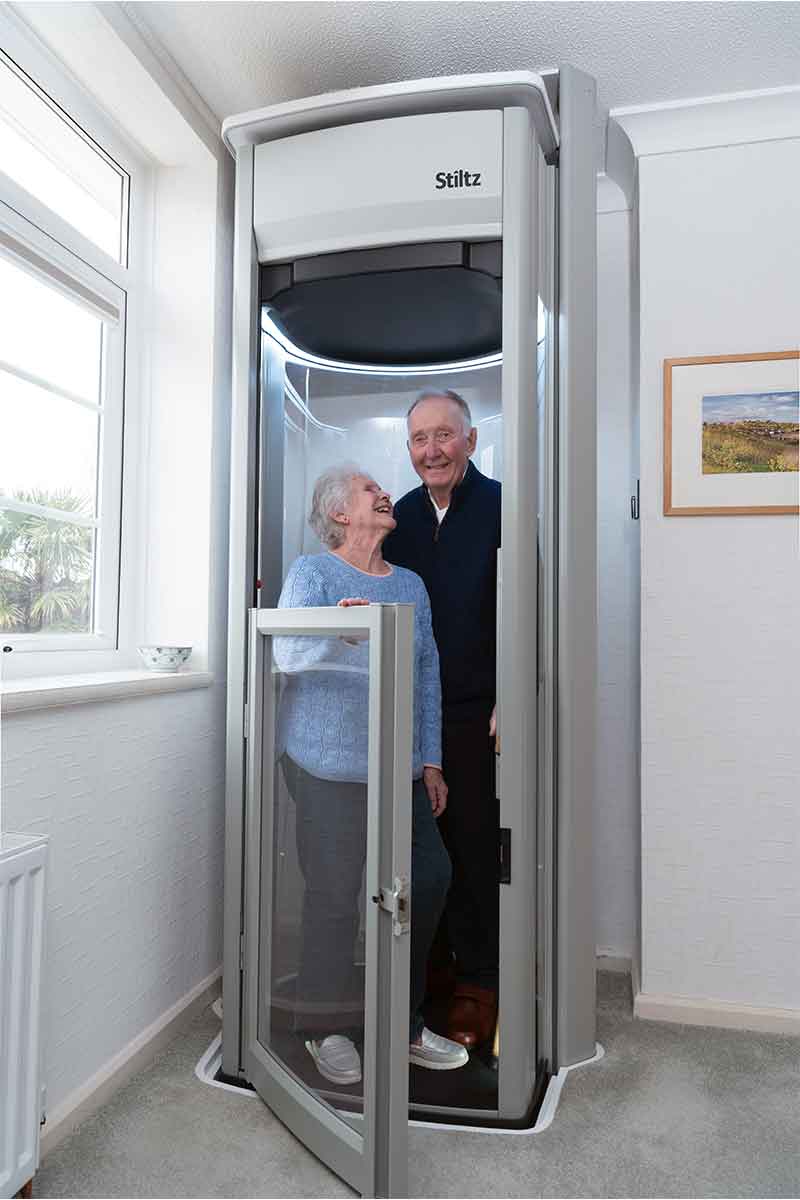
| Stiltz Home Lifts start from £17,000 (excluding VAT). This starting price includes the lift, delivery, professional installation, and a 12-month warranty. In many cases, customers purchasing a home lift for mobility or accessibility reasons may qualify for VAT relief, which can reduce the overall cost. If you are unsure whether this applies to you, our team can explain the criteria and guide you through it. |
When comparing home lift quotes, the headline number rarely tells the full story. Some suppliers price the lift itself and treat surveys, installation, or building works as separate costs later on.
Stiltz takes a more transparent approach. A typical quotation includes the full journey from initial assessment through to installation and handover.
That means:
If anything outside the standard scope is required, it is identified during surveying and discussed before work begins. Nothing is added retrospectively.
Most domestic lift installations require some preparation inside the home, even when the lift is compact and freestanding.
As a guide, standard building works are typically around £2,500. This normally covers creating an opening between floors, arranging a suitable power supply, and making good once the lift is in place.
Some homes need more than this. Older properties, unusual layouts, or specific finishing requirements can increase the amount of work involved. That is why the survey stage is essential. It allows the work to be scoped properly and costed accurately, rather than relying on assumptions.
Home lifts are rarely one-size-fits-all. Many customers choose to tailor their lift to suit their current lifestyle while accommodating future needs.
Optional features that can affect the overall price include seating, grab rails, powered doors, increased travel height, or configurations that allow entry and exit from different sides of the lift car. These are again discussed during the survey so you can decide what adds genuine value and what may be unnecessary.
Our lifts are designed for residential use and not for commercial or apartment buildings. They move directly between floors through the ceiling, without the need for a built-in shaft or major structural changes, which is why they are often chosen when space or disruption is a concern.
From a technical point of view, Stiltz Home Lifts are electric, non-hydraulic through-floor lifts that travel on a self-supporting rail system. Because the lift supports itself, it does not need to be fixed to load-bearing walls or rely on hydraulic equipment.
Other types of home lift work very differently, and that difference usually shows up in both price and installation complexity.
Because of the way Stiltz lifts are designed, they avoid many of the structural elements that increase cost and complexity with other lift types, such as:
What matters most isn’t the type of lift, but how well it suits the house it’s going into. Two lifts with similar starting prices can end up costing very different amounts once installation begins, which is why a Stiltz lift is often a more cost-effective option, with less impact on the building itself.
Are home lift prices fixed or custom quoted?
Home lift prices are usually custom quoted. While many manufacturers publish a starting price, the final cost depends on your home’s layout, the number of floors served, and whether any building work is required. A survey is the only way to confirm an accurate figure.
How much do through-floor lifts cost in the UK?
Through-floor lifts can vary widely in price depending on size, specification, and installation requirements. Compact domestic models often start in the mid-teens, while larger or more complex systems can cost considerably more. The home’s layout plays a significant role in the final figure.
What building work is needed for a home lift?
Most installations require an opening between floors and a suitable power supply. In many homes, this is relatively straightforward, but some layouts need additional work. This is assessed during the survey, so costs and disruption can be planned properly.
Do home lifts require planning permission?
In most cases, internal home lifts do not require planning permission. Building Control approval may still be needed depending on the work involved, and this is usually handled as part of the installation process. If your home is listed or in a conservation area, additional checks may apply.
Can I get VAT relief on a home lift?
You may be eligible for VAT relief if the lift is being installed to help with mobility or accessibility, and you meet the eligibility criteria. This depends on individual circumstances, so it’s best to discuss it with advisors before you proceed.
What does it cost to run a home lift?
Running costs are generally low. Energy use is similar to that of other household appliances, and routine servicing helps keep the lift operating smoothly. During a survey, you can get a clearer idea of ongoing costs based on how the lift will be used.
How can I estimate the total cost of ownership over ten years?
Start with the installation cost, then allow for annual servicing over time. Adding a modest contingency after the warranty period can help with budgeting. For a more accurate estimate, a tailored quote based on your home and usage is the best approach..
Easy to arrange lots of information, No problems with fitting, payment taken in stages, last payment when job was completed. Everyone was friendly from start to finish.

My experience with Stiltz Homelifts. Just over a month ago, I had my Stiltz lift installed and I am so pleased with it. The workmen that came and fitted it were very professional and knew what they were doing. They were so professional I would not hesitate to recommend Stiltz lifts to anybody.
Great looking product, knowledgeable sales people, fitters work clean quickly and polite. Definitely recommend.
Great stylist lift, had for six months without a hitch. Installed by company staff not subcontractors. Cannot fault the lift, buying experience, installation, service. Good company ethos and made in UK.
From the very beginning with the initial construction to the finished product. I have never seen such polite men with an equal work ethic. They cleaned as they went each day. The pets were never in harm. The finished product is awesome. Couldn’t be more pleased
Excellent from beginning to end – and beyond.
Everybody we dealt with at Stiltz was very helpful and efficient, from the initial meeting with Nick Sale, the sales rep, thorough technical inspection, the builders, installers, plumber, electrician, and excellent follow up service and attention. My husband’s life is transformed and mine is much easier. Thank you Stiltz.
Elegant lift, promptly installed by careful and tidy fitters who removed their rubbish the following day. A fair price and an envied addition to our home.
I have been astounded and gratified by the levels of service we have received from every member of the Stiltz teams we have dealt with. A superb lift with exceptional service!
An excellent company from the first contact to the completed project. All personnel were friendly and very polite but stayed extremely professional throughout. Having been in the construction industry for over 40 years I was aware the preparation work was carried out to a high standard by the best of trades people. The lift itself can not be faulted both the operation and aesthetics.
The service was better than 1st class. It was excellent in every way. We could not be more pleased with everything Stiltz applied it’s self to in any way. We would award 6 stars at the very least.

Home lifts are a modern alternative to stairlifts, offering reliability, speed, capacity, and seamless aesthetic integration for a stylish and efficient solution.

Power cuts can be unpredictable. Here’s what you need to know about using your home lift when the lights go out.

Transform your home into a wheelchair-accessible space with our list of wheelchair-friendly adaptations.
